


How it works
ELB is the broadest-target product in the line — it reacts to both bacteria and fungi (yeasts / molds). Sensitivity is set tighter than the bacteria-only products (200 CFU/mL vs 500 CFU/mL) so it serves as a drinking-water heterotrophic plate count replacement.
Collect 1 mL drinking water sample
Incubate
Incubate 48 hr at 20-35°C (room temperature)
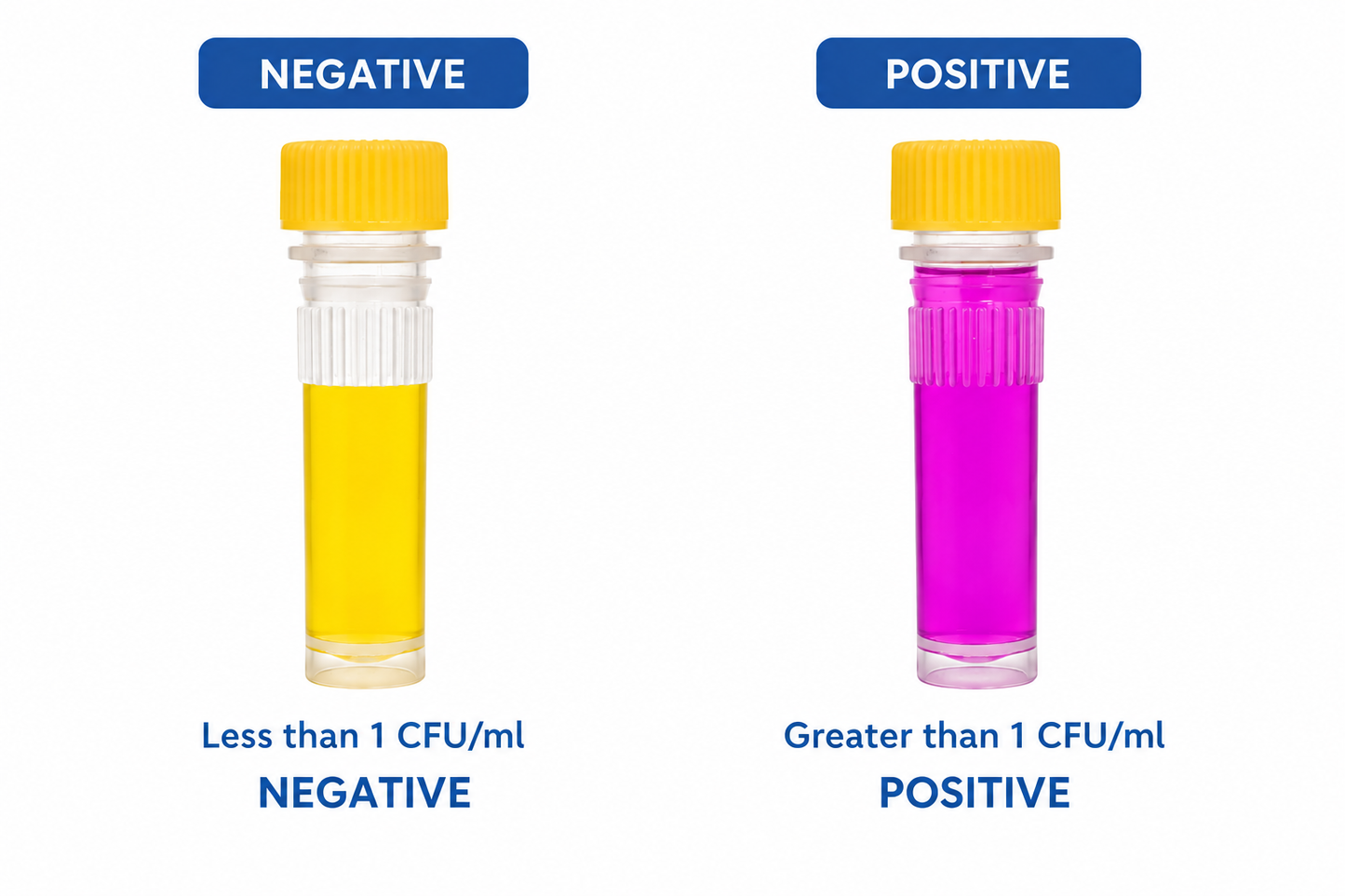
Read visible color change; positive flags HPC > 200 CFU/mL
Sensitivity matrix
Detection limits
Comparison
vs. traditional lab testing
Membrane filtration lab culture (ISO 9215 R2A media (7 day incubation))
Off-site, multi-day turnaround. Requires lab account, membrane filtration manifold, and qualified microbiology technician. Per-test cost from $40–$120 plus shipping.
On-site, same-day result
Single vial replacement for a 48 hr R2A or m-HPC plate culture. No incubator above ambient room temp.
Detection chemistry
How it detects
Visual color change (chromogenic, broad-spectrum)
Disposable test vial reacts with bacterial enzymes to produce a visible color change correlated with contamination level.
Regulatory & standards
Compliance references
- ISO 9001:2015 QMS


